
News
News
The risk of overbooking has increased! Up to 540,000 TEU of goods are waiting to be shipped! Freight rates may skyrocket | Maritime export logistics
May 21,2025
The global trade landscape is being undermined by the deep adjustment of trade policies between China and the United States, and the trans-Pacific transport market, in particular, is undergoing an unprecedented "stress test."
According to a new analysis by Sea-Intelligence, a Danish maritime consultancy, a mountain of goods has been built up in the Chinese market since the "Liberation Day" tariff imposed by the Trump administration on April 2, estimated to be between 180 thousand and 540,000 TEUs.
This estimate is based on a key fact: after the tariffs, bookings plummeted by 30% -40%, and between 25% and 55% of cancelled bookings were already manufactured and lay quietly in bonded warehouses and container terminals in China.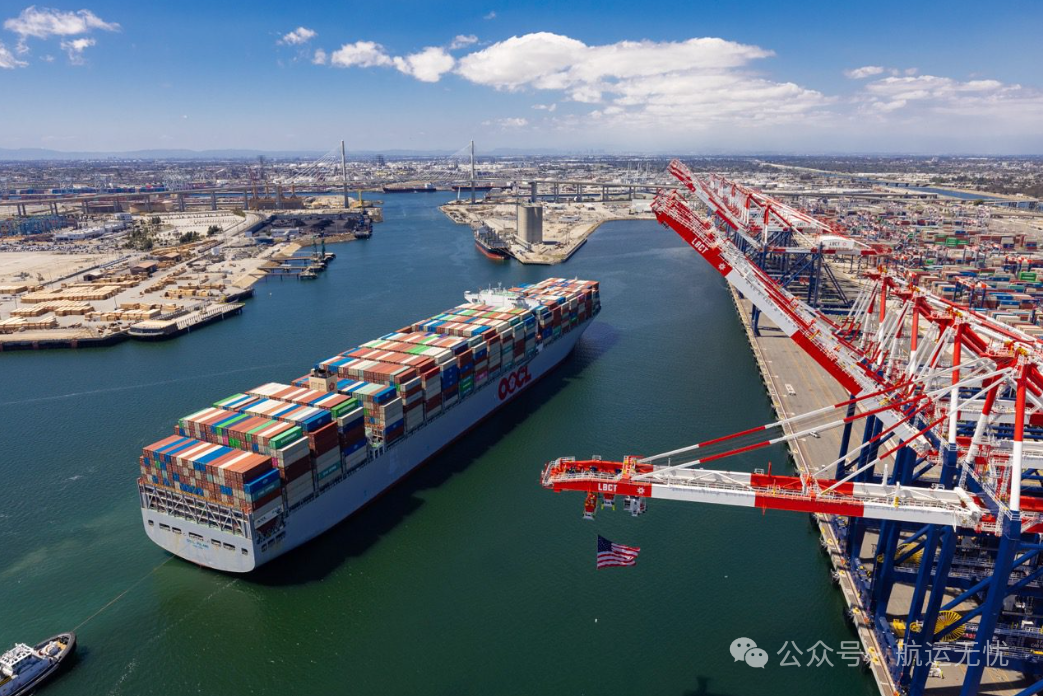
Analysts drilled down to this: If these goods "merge" with regular cross-Pacific freight flows for the rest of the month, transportation demand would surge by 16% to 48%. However, if shipments can be spread out to May and May, demand growth is expected to narrow to 5% -16%.
The report notes that this forecast does not include a likely "surge" in volumes during the peak season. In past experience, U.S. importers are scrambling to ship goods before August 14, and subsequent shipments will only be more intense, which is tantamount to adding another "string of tight" to an already tight market.
On May 14, US Eastern time, the data of container tracking data software provider Vizion added fuel to the market. Following the "tariff moratorium" between China and the United States, container shipping bookings from China to the United States surged by nearly 300%.
Ben Tracy, the company's vice president for strategic business development, exposed a striking set of figures: average bookings for the seven days ended May 5 were 5,709 TEUs, while the seven-day average booking for the seven-days ended May 14 soared by 277 per cent to 21,530 TEUs.

Ruben Huber, a staff writer for Loadstar Premium and founder of OceanX, also keenly captured that the suspension of the U.S.-China agreement in the next 90 days has lit the fuse of the peak season in advance. Bookings are rising as importers seize the policy window, although tariffs remain high and shipping rates are likely to rise.
But demand is booming on this side, but the ship companies have not responded, and capacity recovery is significantly behind schedule. Capacity on the Asia-U.S.-Mexico route shrank 5 percent this week from a year earlier and is expected to fall another 3 percent next week, according to the data. While capacity may have increased by 5 per cent year-on-year in the week of June 2, it will fall back at the end of the month, with a projected decline of nearly 10 per cent year on year. The Asia-US East route, by contrast, appears to be more robust, with capacity flat this week compared with the same period last year and expected to climb weekly in June, increasing by 30% year-on-year by the end of the month.
Sea-Intelligence said that new capacity may be put on the market in the next few days, but they are not sure whether they can suppress the rise in freight rates. After all, market demand is galloping along like a wild horse. The analysis stressed that a surge in shipments in the coming weeks is a certainty. If the backlog of goods can be dispersed to ship for six weeks or even longer, the market pressure can be eased a lot. However, in order to avoid policy risks, shippers will most likely rush shipments, which will undoubtedly make the market more "clogged and congested."
Sea-Intelligence expects spot rates to turn sharply upward in the coming weeks. The huge demand for the Pacific routes will attract more capacity. But this is like a "shift in power," and other Asian export routes are likely to suffer more grounding as a result.
In April, the 145 percent tariff prompted shipping lines to pull capacity from the United States, and about 40 percent of capacity was diverted to the Middle East, Europe and other routes. Today, the trans-Pacific transport market is changing, and capacity allocation is in new difficulties.
In this fierce battle between trade policy and market demand, the future direction of the trans-Pacific transport market is fraught with unknowns. All sides are holding their breath as they prepare for the next challenges.
Previous Page:



Make global trade unimpeded
Contact Phone


Contact Us


Copyright ©Guangzhou Hongdex International Logistics Co.,Ltd
Hotline: 020-84608598
Whatsapp: 18027165010
QQ:2853396538
Email: 2853396545@qq.com
We will provide you with timely feedback