
News
News
Several shipping companies announced price increases on March 1st. If you have cargo, hurry up to book a berth and get it out before it's too late, as prices will be even higher later.
Feb 18,2025
The latest SCFI update to February 14, the composite index recorded 1758.82, down 7.3% from the previous period. For now, most shipping companies have begun to manage "market expectations" and raise their freight prices for March. Declaring a rise in the off-season is really about regulating supply and demand and fighting market psychological warfare, and the ultimate goal is stabilization.
By announcing the increase in prices, the shipping department signaled a "bottoming out of the market" to curb further price pressure by cargo owners, while simultaneously carrying out capacity regulation. According to Xeneta data, in the week starting from February 24, the number of cancelled voyages on the Far East to the Mediterranean Sea is equivalent to 38,900 TEU capacity, an increase of 318% from February 10; The cancellation of the Far East to Northern Europe route corresponds to about 75,700 TEU capacity, an increase of 449%.
Several shipping companies announced price increases:
Maersk raised Far East to Mediterranean FAK.
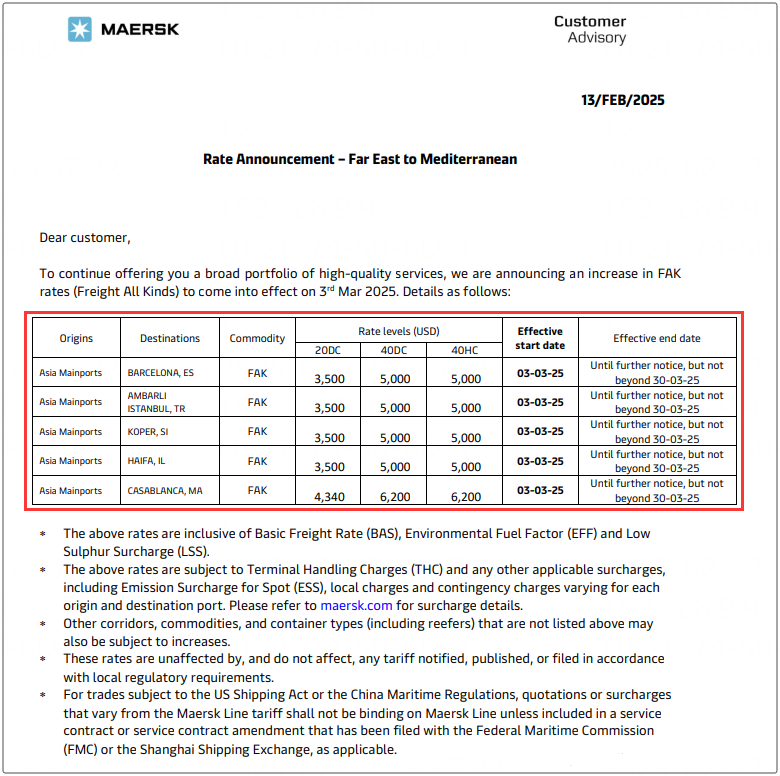
From 1 March 2025, Dafco will increase the FAK rates from the Far East to the Mediterranean / North Africa.

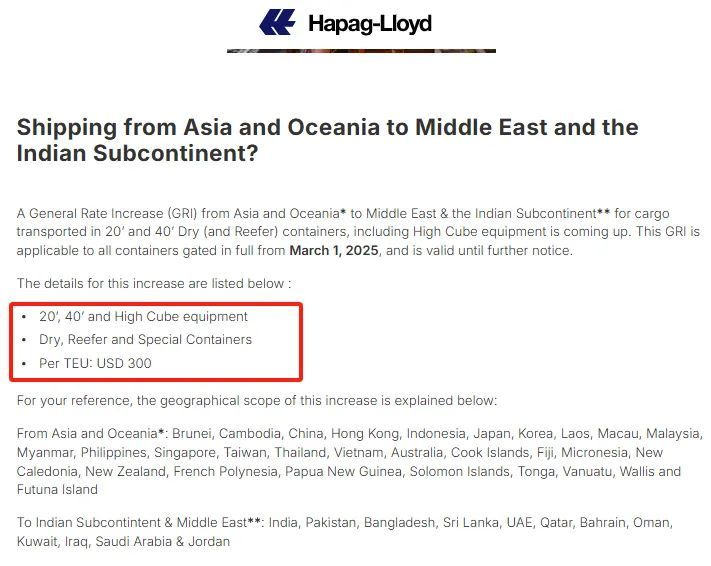
Effective 1 March 2025, Hapag-lloyd will increase FAK rates from the Far East to Europe and impose a GRI of US $300 / TEU for containerized cargoes from Asia / Oceania to Africa, the Middle East and the Indian subcontinent and from Asia to Oceania.
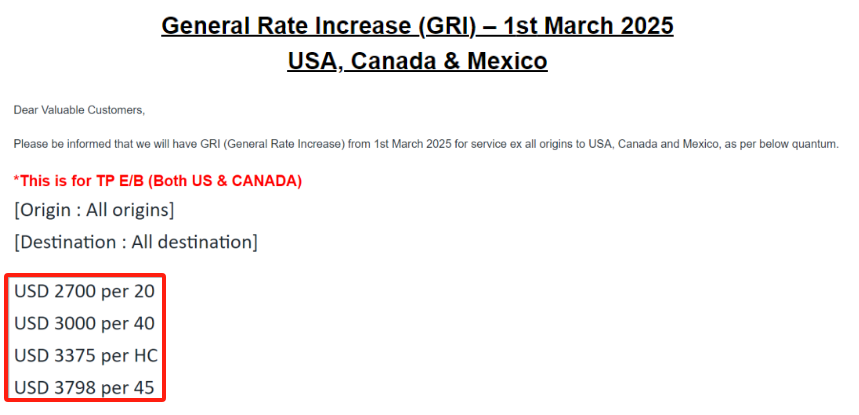
The HMM is raised to the GRI for the United States, Canada and Mexico, effective March 1, 2025.

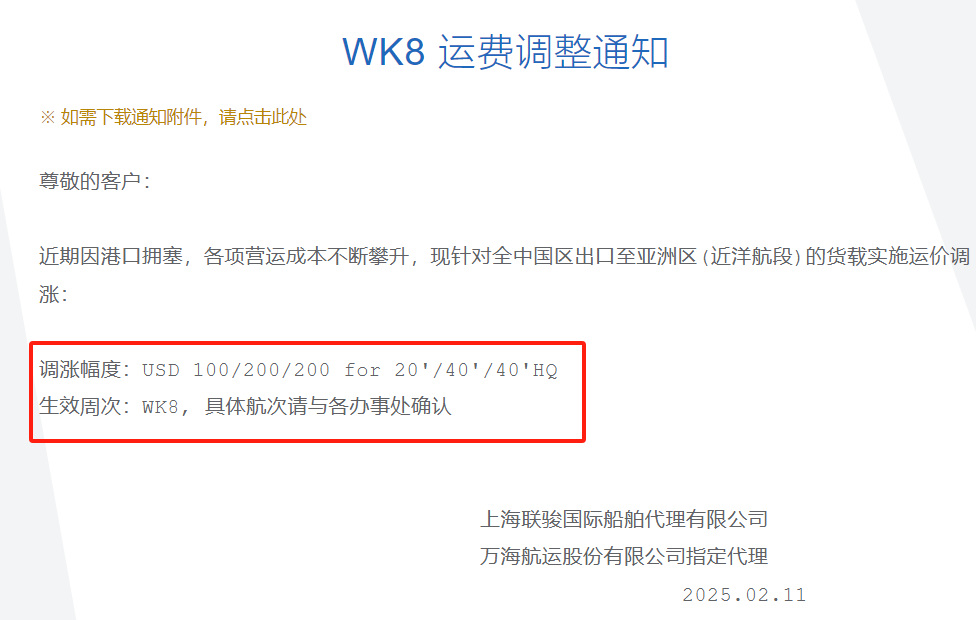
Wanhai introduced a freight rate increase for cargo loads exported from all of China to the Asian region (near the ocean route).
Update the New Emissions Surcharge (NEF).
Can the price increase stabilize? Look at key variables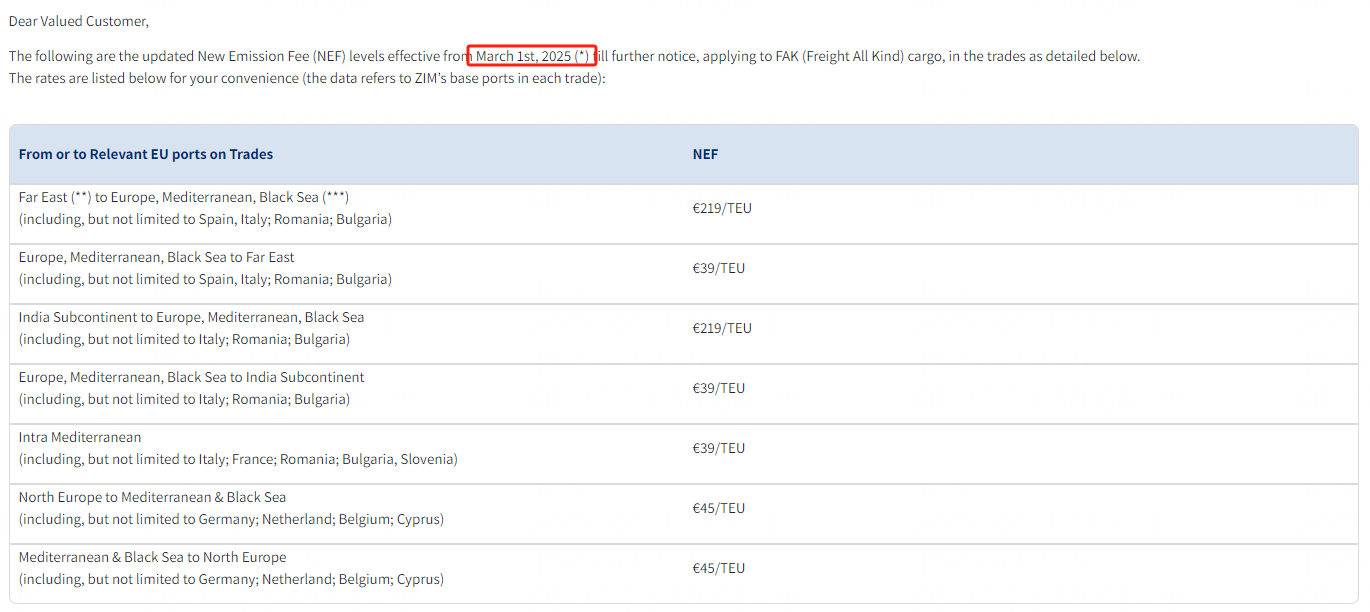
Long-term supply and demand contradiction persists: the current growth of capacity supply in the global container market (8.5%) far exceeds the growth of demand (14%) and the pattern of oversupply and demand remains unchanged.
Short-term support factors: Events such as the lack of a resumption of the Red Sea route and the risk of a strike by terminal workers could drive up market nervousness and indirectly support freight prices. Central control of capacity by large alliances is also key.
The actual effect remains to be seen: if the actual capacity reduction is sufficient, the price increase may be partially implemented, but if the volume continues to be depressed, the probability can only be achieved "stop the decline" rather than "increase." The nature of the off-season rally is that shipping companies try to reverse market weakness through expectation management, and the effectiveness depends on the strength of actual capacity contraction and the pace of demand recovery. In the current environment, stabilization of freight prices may need to be driven by more external events (e.g. strikes, escalation of geopolitical conflicts).
Previous Page:



Make global trade unimpeded
Contact Phone


Contact Us


Copyright ©Guangzhou Hongdex International Logistics Co.,Ltd
Hotline: 020-84608598
Whatsapp: 18027165010
QQ:2853396538
Email: 2853396545@qq.com
We will provide you with timely feedback