
News
News
Freight rates are starting to fall and container freight rates may have peaked
Jul 15,2024
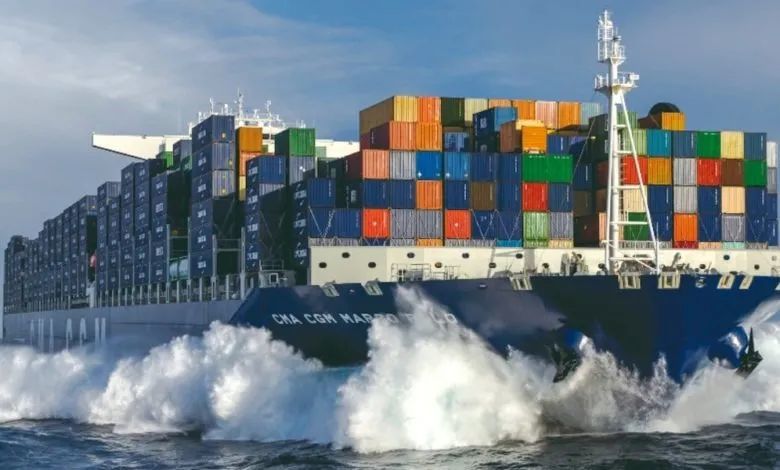
Recently, the turmoil in the Red Sea has forced shipping companies to make a detour to Africa and spot freight rates have risen sharply. After 13 consecutive weeks of gains, the Shanghai Container Freight Index (SCFI) edged down 1.6 percent to 3674.86 points last week, breaking the previous upward trend. While the SCFI index fell, the Druri World Container Index slowed to a gain of only 1% in the current period after jumping 10,000 points in the previous period. Overall, the consolidation market has shown some signs of adjustment after a long period of rise.
As shippers prepare for a difficult bargaining process, the extraordinary boom in the container shipping market in 2024 seems to be reaching its first turning point. The Asia-based consultancy Linerlytica issued a warning that freight rates may have peaked, a prediction that was tentatively confirmed by this week's decline in the freight futures market (as shown in the chart).

Linerlytica analyzed in its latest weekly report: "Although carriers successfully promoted the increase in freight rates on July 1, the new capacity on the West Coast of the United States, Northern Europe, South America and the Middle East has effectively eased the pressure on these routes, leading to further shipping companies. There is a crack in the ability to raise prices." Still, the agency predicts freight rates will remain high until the end of the peak season, which could extend into September.
In terms of specific trade routes, the previous period of the European Container Freight Index (SCFI) valuation showed its first weekly decline since mid-April, by 0.5 per cent, mainly due to the two consecutive weeks of decline in average capacity utilization, despite the rebound in the latest period of European freight rates.
Linerlytica co-founder Johnson Leung noted that,Freight rates on Asia-Europe routes have shown signs of peaking, with freight forwarders getting more class space in new services launched this month.He further explained: "According to utilization data, the new Asia-Europe routes opened last week led to an unprecedented downturn in capacity on Asian routes. CMA CGM's French Peak and Hapag-Lloyd's CGX utilization rates are well below the recent average for Asia-Europe routes."

Asian shipping companies have expressed concern about this, with some shipping companies saying that "shipping companies are about to collapse", stressing that this year's shipping boom is fundamentally different from the boom during the new crown epidemic. A non-ship carrier (NVOCC) executive revealed that,Although freight rates in most regions remain firm, freight rates from China to the Middle East have fallen 1/3 in the past four weeks, while freight rates from Asia to northern Europe have "stagnated".
On the trans-Pacific route, investment bank Jefferies pointed out that although freight rates from Asia to the West Coast of the United States are still at an annual high, close to $8000 per foot of container,But market signs suggest that booking prices will fall back to around $7000 per foot of container in late July through August.
A number of experts in the field of container shipping consulting also expressed their views on this. According to Lars Jensen, CEO of Vespucci Maritime,Barring a major new breakdown in the supply chain, such as increased congestion at ports, a Canadian rail strike or a widening crisis at the Red Sea, July is likely to be the peak of the current rise in freight rates.However, he also warned that the contract negotiation deadlock of the US East Coast dockworkers may trigger a wave of strikes in the autumn and become a new round of uncertainties affecting freight rates.
Andy Chu, an analyst at Deutsche Bank, said bluntly.There is a bubble in the current container shipping market, and it is difficult to understand that freight rates have risen beyond historical levels outside the new crown epidemic.
However, not all analysts are pessimistic. Emily Stausbøll, senior shipping analyst at Xeneta, noted that,Its data show that average in stock freight rates on Asia's main routes will continue to rise in mid-July, which coincides with the record demand for global seaborne container traffic in May.She thinks,in stock freight rates will continue to climb as long as shippers feel they must pay more to secure cargo space.
Simon Heaney of Dreary, a British consultancy, and Dan Nash of Veson Nautical,It is believed that freight rates will be affected by port congestion and equipment supply, while current demand is still strong and no fundamental changes are expected this year.
In addition, congestion in the port of Singapore has been easing since May, and the waiting time for ships to berth has been significantly reduced,However, ports in other regions, such as near the Cape of Good Hope, have been hampered by adverse weather conditions, further complicating global shipping.
Previous Page:



Make global trade unimpeded
Contact Phone


Contact Us


Copyright ©Guangzhou Hongdex International Logistics Co.,Ltd
Hotline: 020-84608598
Whatsapp: 18027165010
QQ:2853396538
Email: 2853396545@qq.com
We will provide you with timely feedback