
News
News
90% of container ships are delayed!
Jul 08,2024
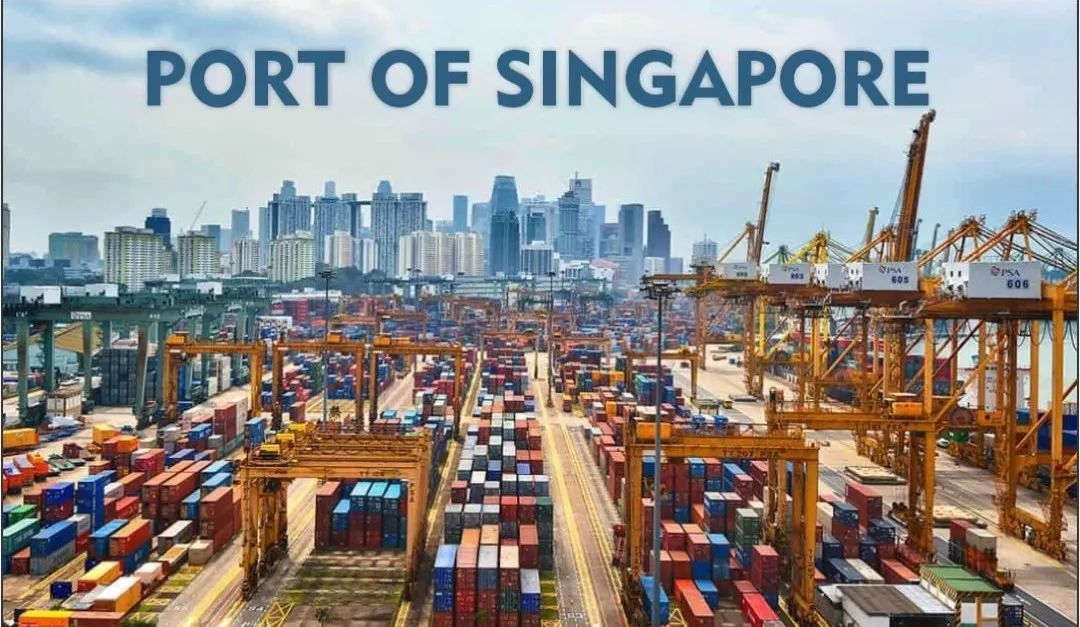
Congestion in Singapore's ports has climbed to its highest level since the outbreak of the epidemic, a grim situation that directly reflects the long-term strategy of ships being forced to take detours to avoid the risk of attacks in the Red Sea region, which has seriously disrupted the global shipping order and led to operational bottlenecks at other major ports in Asia and Europe. Singapore's Minister of Transport, Tsui Fong Tat, said,At present, about 90% of container ships fail to arrive in Singapore as expected.
At the same time, many consumer-oriented companies are planning to prepare for the end-of-year sales season to replenish inventory plans. However, these retailers, manufacturers and other related industries, which are highly dependent on large container ships for cargo transportation, have to face the multiple challenges of soaring freight rates, severe port congestion and container supply shortage. According to the maritime data agency Linerlytica, global port congestion has hit an 18-month high, with 60% of ships parked in Asia. As of the end of June, ships with a total capacity of more than 2.4 million TEUs were waiting in ports.
However, the biggest difference between this time and the outbreak is that the reason for the port is not the buying frenzy of home consumers, but the ship in order to avoid the attack of armed groups in the Red Sea, but to bypass the longer route to Africa, so that the ship's sailing time was disrupted. Singapore's Minister of Transport, Chee Hong Tat, revealed in a written reply to a related question,Affected by the crisis in the Red Sea region, about 90% of container ships have not arrived in Singapore as expected.This proportion is significantly higher than the average level in 2023 (about 77%). It highlights the challenges and uncertainties facing the current maritime industry.

Singapore's Minister of Transport, Xu Fangda, emphasized that this situation has significantly increased the demand and difficulty of handling containers at Singapore terminals. He further explained: "In order to speed up the return of ships to Europe, liner companies have chosen Singapore as an important transshipment hub. Although this has enhanced the strategic position of the Singapore port, it has also extended the operating time of container ships in the port, which has triggered a chain reaction.-The waiting time for incoming ships increases, and the problem of berth congestion is becoming more and more serious."
In the face of this challenge, he made it clear that the Ministry of Transport, the Maritime and Port Authority of Singapore (MPA) and the Port of Singapore Group (PSA) are "working closely" to find and implement effective solutions to ease port congestion and restore normal shipping order. Xu Fangda elaborated on a series of measures and future plans taken by Singapore Port to meet the current challenges. Singapore has restarted some berths and storage yards at Keppel Wharf in the urban area and Pagar Wharf in Tanjong to improve its handling capacity. Since the beginning of the year, PSA has significantly improved the efficiency of its terminal operations and plans to further expand its capacity in the coming months to cope with the expected increase in demand. It is particularly worth mentioning that the construction of Das Port is progressing smoothly. Three new berths will be put into operation this year. The first berth is expected to be opened this week, and the next two will be put into use in October and December respectively. PSA also said that if demand continues to rise, it will accelerate the development of additional processing capacity.
On the current operating situation, he noted: "In the first five months of this year, Singapore's container throughput increased by 7.7 per cent year-on-year to 16.9 million TEU. Although our efforts have improved the average waiting time for berth this month (June), the Red Sea crisis will not abate soon and will continue to have an impact. The surge in cargo volumes caused by cargo owners shipping early for the holidays may still exacerbate port congestion." Despite the overall market trend adjustment, the performance of the US-East route is still particularly strong, with the 40-foot container freight rate approaching $10000, setting a new high since late June 2022.
Congestion in the Port of Singapore in the Current Situation



Make global trade unimpeded
Contact Phone


Contact Us


Copyright ©Guangzhou Hongdex International Logistics Co.,Ltd
Hotline: 020-84608598
Whatsapp: 18027165010
QQ:2853396538
Email: 2853396545@qq.com
We will provide you with timely feedback